
Uncommon Engine Hesitation Causes: Insights from Certified Mechanics in Albuquerque
Albuquerque, United States - March 23, 2026 / Mango Automotive /
Albuquerque, NM – Mango Automotive is bringing attention to engine hesitation issues that go beyond traditional repairs. As certified mechanics in Albuquerque, the team identifies problems linked to complex electronic controls and sensor networks.

Modern Vehicle Systems Create New Hesitation Challenges
Onboard computers in modern vehicles manage dozens of systems at once. Sensors, control modules, and electronically controlled components work together to regulate acceleration, idle quality, and power delivery. When one part of this network fails or sends incorrect data, the engine can hesitate even though no traditional mechanical issue is present.
Because these systems are interconnected, hesitation symptoms can appear inconsistent or difficult to trace without modern diagnostic tools. This complexity has made accurate diagnosis more important than ever for drivers experiencing stumbling, delayed acceleration, or uneven power response.
Less Obvious System Failures Behind Modern Engine Hesitation
Electronic Throttle Control and Sensor-Related Issues
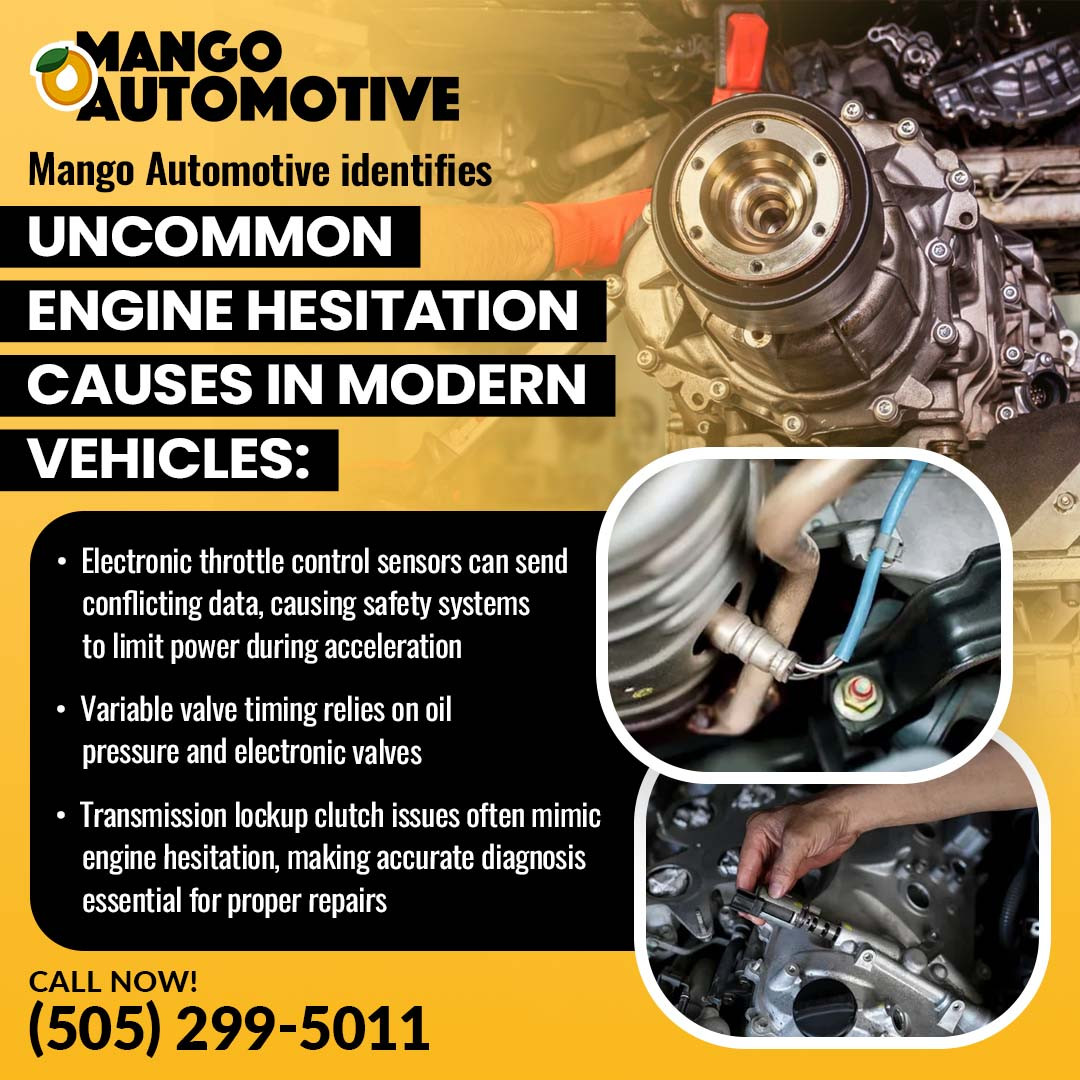
Many modern vehicles use electronic throttle control rather than mechanical cables. These systems depend on accelerator pedal position sensors and throttle body motors to translate driver input into engine response. When sensors wear, become contaminated, or develop electrical faults, the engine may hesitate while the control module attempts to interpret conflicting data.
Safety systems built into throttle controls can also limit power when sensor readings do not match. In these situations, the vehicle may reduce throttle response as a protective measure, creating noticeable hesitation during acceleration.
Variable Valve Timing and Oil-Related Concerns
Variable valve timing systems help engines adjust performance based on driving conditions. These systems depend on oil pressure, electronic control valves, and timing adjusters to operate correctly. When oil quality declines or passages become restricted, timing changes slow or stop altogether.
Clogged filters, sticking valves, or worn adjusters can prevent the engine from responding properly under load. In many cases, hesitation linked to variable valve timing improves after correcting oil-related issues and restoring proper system function.
Turbocharger and Air Management Problems
Turbocharged engines introduce additional components that can affect drivability. Pressure control components, sensors, and intercoolers control turbocharger boost levels to match acceleration demands. Leaks, worn diaphragms, or faulty pressure sensors can disrupt this balance.
When boost pressure does not match engine demand, drivers may notice a delayed response or sudden power loss. Identifying these problems usually depends on proper testing rather than replacing parts based on assumptions.
Transmission Symptoms Often Mistaken for Engine Issues
Certain transmission problems can feel like engine hesitation. Lockup clutch concerns may cause shuddering or bogging during light acceleration, while delayed or rough shifts can mimic power loss. Understanding the difference between engine and transmission-related symptoms helps guide proper diagnosis.
Fuel System and Advanced Sensor Failures
Modern fuel systems use high-pressure pumps and electronic regulators to maintain steady fuel delivery. Wear within these components can cause pressure drops during acceleration, leading to hesitation. Failure of knock sensors and atmospheric pressure sensors can also force the engine into protective modes that reduce power.
In high-altitude environments like Albuquerque, accurate environmental sensor data is especially important for maintaining proper fuel mixture and performance.
When Professional Diagnosis Becomes Essential
Hesitation that appears unpredictable, changes with weather conditions, or triggers multiple warning lights often points to complex electronic issues. These problems typically cannot be resolved with basic code readers or visual inspections.
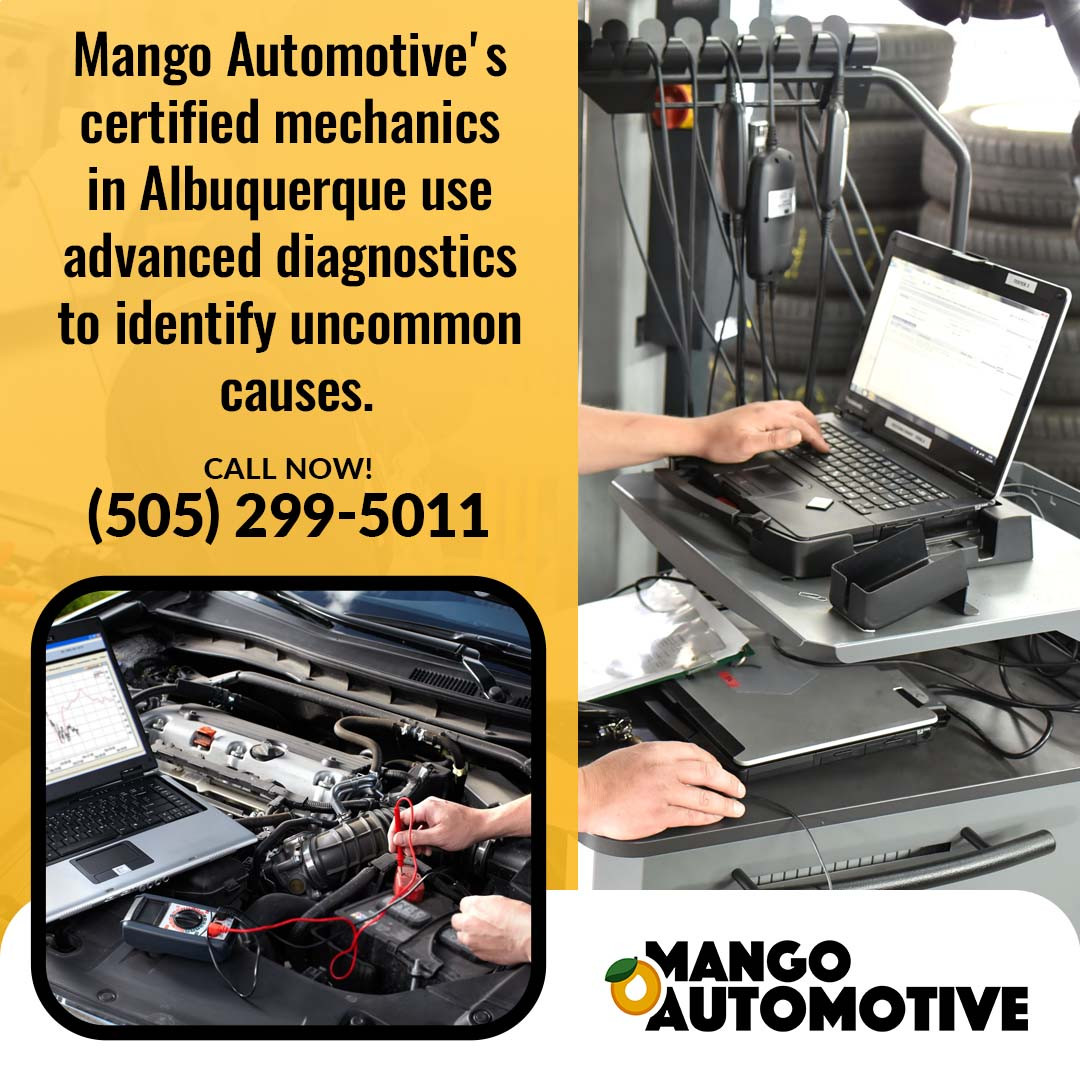
Professional diagnostic equipment allows mechanics to access manufacturer-specific data, perform system tests, and review real-time sensor information. Software updates and recalibrations may also be required to restore proper operation.
Engine Diagnostic Services in The Heights, Albuquerque
Mango Automotive focuses on diagnosing complex engine hesitation issues in modern vehicles. As one of the best mechanics in The Heights, the shop uses advanced diagnostic tools to identify contributing factors across key vehicle systems. Certified technicians perform real-world testing and data analysis to identify customer concerns and isolate contributing factors. The focus on clear communication helps drivers make informed decisions without confusion.

Professional Engine Diagnostics for Albuquerque Drivers
Contact Mango Automotive at (505) 299-5011 to schedule professional engine diagnostic service in The Heights, Albuquerque. For those searching for a mechanic shop near you with experience in modern vehicle systems, Mango Automotive provides trained service and dependable support.

Contact Information:
Mango Automotive
10340 Comanche Rd NE
Albuquerque, NM 87111
United States
Jesse Jackson
(505) 299-5011
https://www.mangoautomotive.com/the-heights


Original Source: https://www.mangoautomotive.com/uncommon-engine-hesitation-causes-insights-from-certified-mechanics-in-albuquerque

